To Kill a Monkey
Oyibo don go - Now what?

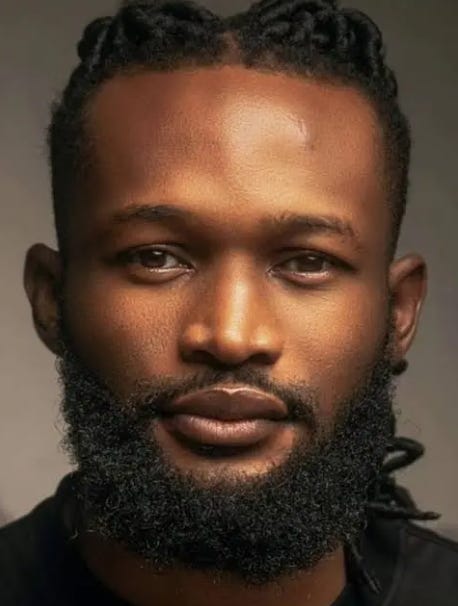
I recently watched To Kill a Monkey, prepared to roll my eyes at the overly sentimental narrative, but then the main character, Oboz, emerged with this wild, untamed spirit—speaking in conk pidgin so thick I needed subtitles to follow. Pure authenticity that pulled me right in. Soon I wasn’t watching the show, just Oboz.
We’ve come a long way from the Nollywood where village witch doctors spoke with clipped British accents worthy of Eton. Before the movie buffs throw their popcorn at me, I’m not here to talk about movies. I’m talking about cultural confidence. Cultural maturity.
Nigeria in the early 2000s was a country where the most popular radio hosts had American accents—even though many had been rejected for US visas. You went into nightclubs and 98.2% of the music would be American rap. Anything but local. But now? A sea change. Nigerians are gravitating toward artists that feel authentic, that resonate with lived experiences. Asake, Burna Boy, Davido, Tems (abeg alphabetical order so nobody vexes)—they all have their own unique style with beautiful Naija flavour.
For too long, the Nigerian startup scene has resisted this cultural reawakening. We’ve been in this echo chamber, dancing with no rhythm to San Francisco’s music, reading the stories of Bezos and Musk when we should be writing our own unique tales.
I’m excited now for the first time in maybe five years. But there’s still one monkey left to kill.
The monkey of cheap foreign capital.

Ask experienced VCs (even your faves in Silicon Valley) and they’ll tell you their best investments came from seasoned operators who took a deep problem and attacked it with new technology. Instead, we’ve watched the best but maybe not so bright walk away with life-changing money attacking the 18th iteration of an overserved problem.
The good news? Easy money has gone. Those “X for Africa” companies built on a wish and a pitch deck are struggling, dying, or a distant memory. Even the influx of foreign founders—the tourists attracted to the deceptive “Africa rising” story—has reduced to a trickle. As a hardened entrepreneur friend put it cheekily: “Oyibo don go. Na only we remain.”
But now with all the noise gone, the fever-pitched fundraising announcements silenced, we can either stare at our navels or throw the monkey off our back and get to work.
Sir Christopher Wren designed 52 churches in the City of London after the Great Fire in 1666, including St Paul’s Cathedral. For such an acclaimed architect, he was laid to rest in the crypt with a simple memorial. The plaque reads: “Lector, Si Monumentum Requiris Circumspice”— “Reader, if you seek his monument, look around you.”
Chai!! I told you I love oyibo. See the simplicity.
In a similar manner, all entrepreneurs have to do is look around and see the opportunities—they’re similarly evident. The biggest problems remain: education, health, logistics, energy. But let me be specific because categories are lazy:
Real opportunities that exist today:
The Nigerian student who can’t access quality university education because ASUU is on strike (again) and the alternative is a $30,000/year foreign degree her parents can’t afford. Meanwhile, decent online education infrastructure exists globally—we need more people on this journey without the “Harvard for Africa” bullshit.
The farmer in Kaduna who harvests tomatoes that rot before they reach Lagos because our logistics infrastructure is held together by prayers and diesel generators. Not sexy. Requires physical infrastructure. Will take years. Also? Massive opportunity for anyone not chasing quick exits.
The 60-year-old with hypertension who can’t afford the drugs to stay alive and health insurance penetration is 10%. There’s your market-creating innovation—but it requires actual work, not a Figma mockup and a waitlist.
Those who know me will know I’m a cofounder of Carbon, a digital bank in fintech—the very sector I just told you to ignore. So yes, I’m like that older brother admonishing his younger sibling not to smoke as he takes a drag of his Marlboro Light, blowing smoke rings in the air. The difference? I’m not telling you to avoid fintech because it’s bad for you. I’m telling you there are only so many seats at the table, and you’re late to dinner. Carbon will fund your customers when you start something in education, health, or logistics. We’re together, as my Kenyan siblings will say.
But here’s the real koko that I need you to understand: The easy money is gone, and that’s the best thing that could have happened to us. The founders “hiring entrepreneurship” for a visa and dollar salary are finding out entrepreneurship is actual work. The VCs pattern-matching on “Stripe for Africa” are learning that Africa isn’t just America with worse roads.
What remains are the real problems and—if we’re honest with ourselves—the real founders. The ones who understand that building on this continent requires actual domain knowledge, not a Stanford (Wharton still rocks :-) ) degree and good wifi.
The beautiful ones are not yet born. But at least now we’re done pretending the ugly ones were beautiful. And that’s fine—we were funding the wrong babies anyway.
Cracked me up from start to finish! 🤣Hard but necessary truth. I never saw the X for Africa model in that light, I saw it as taking a model that has proven success & bringing it home. Like the ‘Uber for Y’ model a lot of entrepreneurs in the U.S still use. But I get it - our problems in Africa are unique to us & we need to start solving for them . Great piece 👏🏽
Very solid. Thank you